Top 10 Evolution Soundbites DEBUNKED! – Geology Edition
As a geologist, Dr. Andrew Snelling has spent decades studying the Earth’s layers firsthand, not just in theory, but as physical evidence across continents. To debunk the most common evolution soundbites, we sat down with him and compared what is actually observed in the field with the top claims evolutionists repeat.
These phrases are everywhere: “The fossil record proves evolution.” “Rock layers take millions of years.” “Oil, coal, and diamonds take millions of years to form.” They’re seeded into people’s thinking early and rarely questioned. But when you compare those claims to real-world observations, the story starts to break down.
 Take the fossil record. We’re told it shows gradual evolution, but what we actually see is sudden appearance and stability. Even Stephen Jay Gould acknowledged this pattern. Creatures appear fully formed in the Cambrian explosion and remain the same. Trilobites show up with complex eyes immediately. The coelacanth was supposed to be extinct for millions of years, yet it’s still here, unchanged. Fossils themselves point to rapid burial. Clams found closed were buried alive. Whale carcasses today disintegrate within weeks, yet we find preserved whale fossils. Polystrate fossils cut through multiple layers, meaning those layers had to be laid down quickly, not slowly over time.
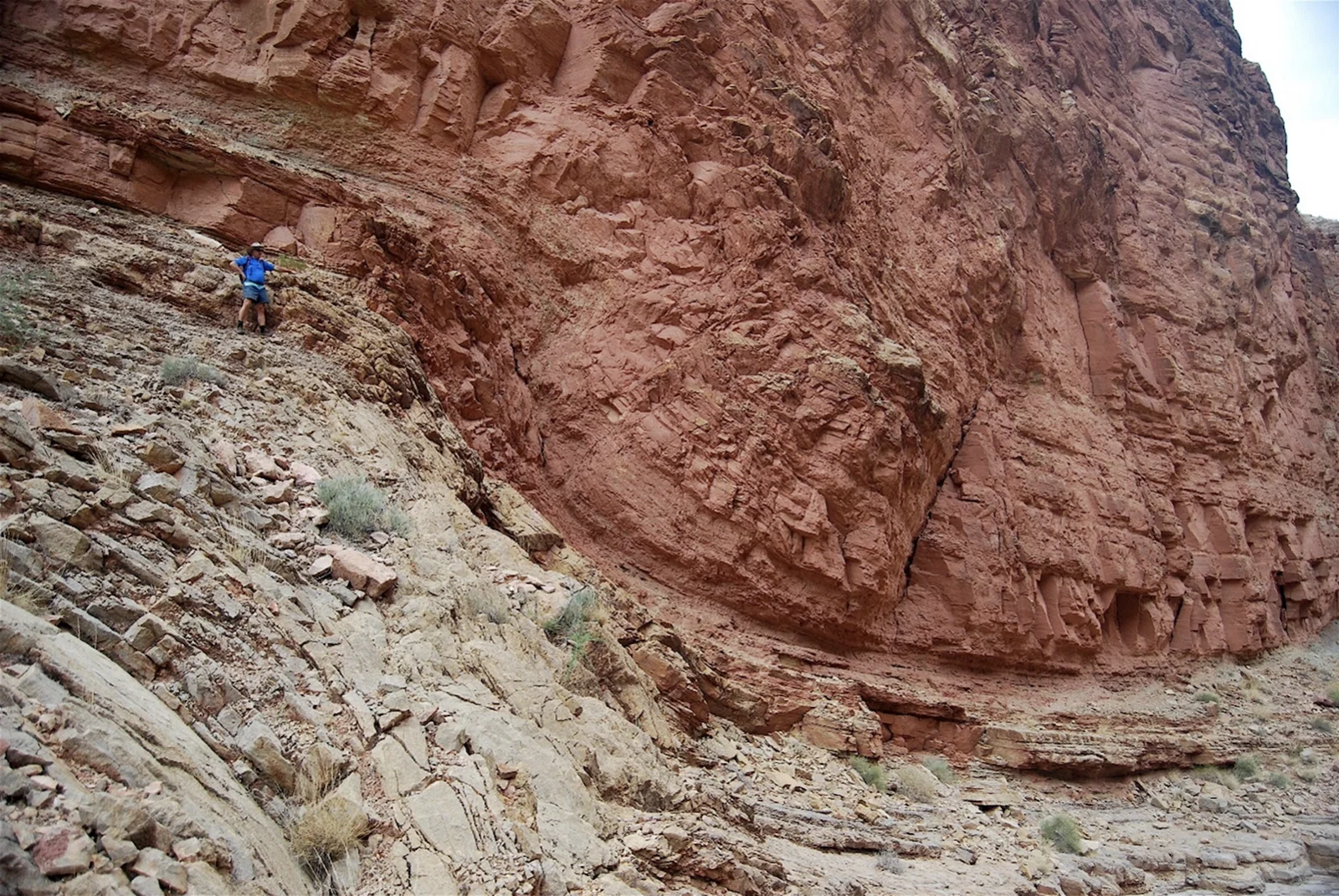 The same pattern shows up in rock layers. You find sand, silt, lime, and ripple marks that record fast-moving water. These layers can be traced across continents with the same composition and fossils. From the Grand Canyon across to other regions of the world, the consistency is striking. You don’t see continent-wide, uniform layers forming today under normal conditions. What you do see are signs of rapid, high-energy deposition, exactly what we would expect from a catastrophic event.
 Coal is another example. We’re told it takes long periods of time, requiring thick peat deposits slowly compressed. But coal seams often lack root systems and instead contain transported material like bark, leaves, and twigs. The compression ratios are not what people are told. Add in a pre-Flood world with far more vegetation, floating log mats, and oceans covering large portions of land, and the amount of plant material available changes completely. Under the right heat and pressure, coal can form rapidly. The issue isn’t the material. It’s the assumptions about time.
Erosion tells the same story. We’re told slow processes shaped the land over millions of years, but real-world events show how quickly erosion can happen. The Oroville Dam incident and flooding at Lake Powell demonstrated how fast moving water can tear through rock and concrete. Cavitation acts like a jackhammer under high flow. Scale that up to a global Flood with massive water movement and earthquakes, and you’re looking at rapid, large-scale erosion, not slow change.
The Grand Canyon fits this perfectly. The Colorado River today cannot carve it, and there is very little debris left behind, which you would expect if it formed slowly. Instead, it looks like a large volume of water moved through quickly and carried the material away. It was a lot of water in a short time, not a little water over a long time.
Across all of this, the pattern is consistent. The observations point to rapid processes, massive water movement, and catastrophic conditions. The long ages are not coming from what we see. They are being added through assumptions about the past. As Dr. Snelling pointed out, secular scientists operate from the idea that the present is the key to the past, but that framework itself shapes the conclusion. Two people can look at the same evidence and come to different conclusions based on their starting point.
 Scripture warned this would happen. In Second Peter chapter 3, it speaks of people being willingly ignorant of creation, the Flood, and the coming judgment. Creation establishes the origin, the Flood explains the geological record we see, and the coming judgment reminds us this world is not without accountability.
And this is where it matters most. If we cannot trust God’s Word at the very beginning, then what happens to the rest of it? If Genesis is treated as flexible or symbolic to fit outside ideas, it weakens the foundation the Gospel stands on. But if God has spoken truth about the beginning, then we can trust Him about everything else, including salvation.
This isn’t just about rocks and layers. It’s about whether we trust God and His Word as the authority from the start.
If what you’ve been told by people around you doesn’t match what’s actually observed, it’s time to take a closer look.
Watch Creation Today Show: