The Very Recent History of Man
The story of human history isn’t what we’ve been told.
For decades, we’ve heard the same deep time narrative. Civilization slowly developed over vast ages. Early humans were primitive, gradually discovering language, tools, medicine, and culture over tens of thousands of years. But when you actually look at the archaeological record, that story begins to unravel.
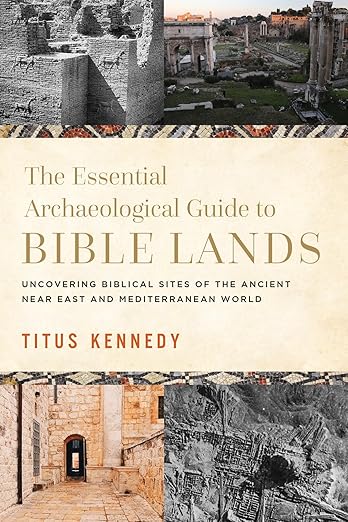
 That’s exactly what we explored on our recent show, The Very Recent History of Man, with Dr. Titus Kennedy. Dr. Kennedy is a field archaeologist who has worked on excavations across the Middle East, studying ancient civilizations in the very regions where biblical history unfolds. He has examined the evidence firsthand, contributed to ongoing research in biblical archaeology, and authored multiple books addressing the historical reliability of Scripture, early human history, and the archaeological framework of the Bible.
Throughout the discussion, we learned that the earliest civilizations don’t look primitive at all. They look advanced. In ancient Mesopotamia, the earliest writing systems appear around 3000 BC, not as crude beginnings but already structured and functional, with systems of record-keeping, trade, and governance in place.
 In Egypt, we see hieroglyphics emerging around the same time, along with organized society and documented medical knowledge. The Edwin Smith Papyrus, often dated to around 1600 BC but reflecting much earlier knowledge, describes surgical procedures and detailed anatomical observations. These were not ignorant people stumbling forward. They were intelligent, capable, and operating with precision.
And that matters. Because it’s not what you would expect if humanity took massive amounts of time to develop. However, It’s exactly what you would expect if people started out intelligent, with knowledge already in place.
We also talked about something that shows up across cultures around the world, the memory of a global flood. In the Epic of Gilgamesh, especially Tablet 11, compiled around 1200 BC from earlier sources, we see a flood account with different names but the same core story. Widespread destruction, a preserved remnant, and survival through judgment. And it’s not just there. Variations of this same event appear again and again across ancient cultures. That’s not a coincidence. That’s a shared memory of a real event.
And right after that event, we see something else emerge quickly, metallurgy. Evidence of early bronze working appears in the ancient Near East by around 3000 BC, and iron working follows later. Scripture points to early metalworking in Genesis 4:22 with Tubal-Cain, and the archaeological record shows these technologies appearing rapidly and already in use, not slowly discovered over vast ages.
Dr. Kennedy’s work with Discovery Institute, along with his recent books and research, continues to show that intelligence, information, and design are foundational, not accidental. And when you follow the evidence honestly, it aligns far better with a recent origin of humanity than with the deep-time assumptions often placed on the data.
So what does all of this ultimately mean?
 If human beings appear in the record already intelligent, already capable, already able to build, write, heal, and organize, then we are not looking at the result of a long, blind process. We are looking at the work of a Creator. The Bible tells us that mankind was made in the image of God, and that truth explains why intelligence, creativity, and innovation appear from the very beginning of history.
What we see in the ground is not the story of people slowly becoming human. It is the story of people who were created human, living in a world shaped by real events, including judgment and redemption. The archaeological record does not push us away from Scripture. It brings us back to it, confirming that the Bible is not myth, but history grounded in reality.
If you haven’t watched the episode yet, take the time to experience it. Once you see it, it doesn’t just change how you think about the past. It points you to the One who was there at the beginning, and who has revealed the truth about it.
Watch Creation Today Show: