Top 10 Evolution Arguments Exposed – Geology Edition
People are told over and over that the evidence for millions of years and evolution is overwhelming. They say that it’s settled; that it shouldn’t even be questioned.
But when you stop repeating phrases and actually compare those claims to what we observe in the real world, a different picture starts to emerge.
Not one based on speculations and assumptions. But based on observation.
Here are 10 of the most common arguments, and what happens when you put them to the test.
 1. THE FOSSIL RECORD SHOWS GRADUAL EVOLUTION
That’s the claim.
But what do we actually see?
Life appears suddenly in the fossil record, fully formed and fully functional. This is known as the Cambrian explosion. Complex creatures like trilobites appear with advanced systems already intact.
And they don’t gradually change into something else. They stay the same. This is called stasis.
Even evolutionist Stephen Jay Gould admitted this pattern.
We also find “living fossils” like the coelacanth, unchanged from what are claimed to be millions of years old layers.
That’s not gradual evolution. That’s what we would expect to find as creationists!
2. EROSION RATES PROVE A VERY OLD EARTH
 We’re told slow erosion over millions of years shaped the earth.
But real-world events show something very different.
At the Oroville Dam in 2017, water tore through solid rock and concrete in a short time. At Mount St. Helens, rapid mudflows carved canyon-like features in days.
Fast-moving water under the right conditions is incredibly forceful.
Multiply that force many times over, and you get catastrophic erosion in a fraction of the time.
You don’t need millions of years. You need the right conditions.
3. PLATE TECTONICS TAKE MILLIONS OF YEARS
 We’re told continents moved slowly over vast time.
But look at the Himalayas. The rock layers are bent, not fractured. That means they were soft when they were formed and moved rapidly.
Slow movement would snap rock.
Rapid movement bends it.
Like two cars colliding. At 1 mile per hour, nothing happens. At high speed, everything changes instantly.
4. ICE CORES SHOW HUNDREDS OF THOUSANDS OF YEARS

Scientists count layers in ice and say each layer equals a year.
But that assumption breaks down.
Layers can form from individual storms, not years. In a post-Flood world, storms could have been frequent, even weekly.
In fact, a World War II squadron buried in Greenland was found decades later under what appeared to be “hundreds of years” of ice layers.
That’s not theory. That’s observation.
 5. CORAL REEFS REQUIRE LONG AGES
We’re told coral grows too slowly to form reefs quickly.
But that’s not what we see today.
Some coral grows rapidly. Shipwrecks become covered in coral in a short time. The Great Barrier Reef shows cycles of destruction and rapid regrowth.
It doesn’t take tens of thousands of years.
 6. THE GRAND CANYON TOOK MILLIONS OF YEARS
We’re told the Colorado River slowly carved the canyon.
But if that were true, we would see massive buildup of eroded material downstream.
We don’t.
Instead, we see evidence of rapid, catastrophic erosion. Huge amounts of material removed quickly.
Not a little water over a long time.
A lot of water over a short time.
7. CARBON DATING PROVES GREAT AGE
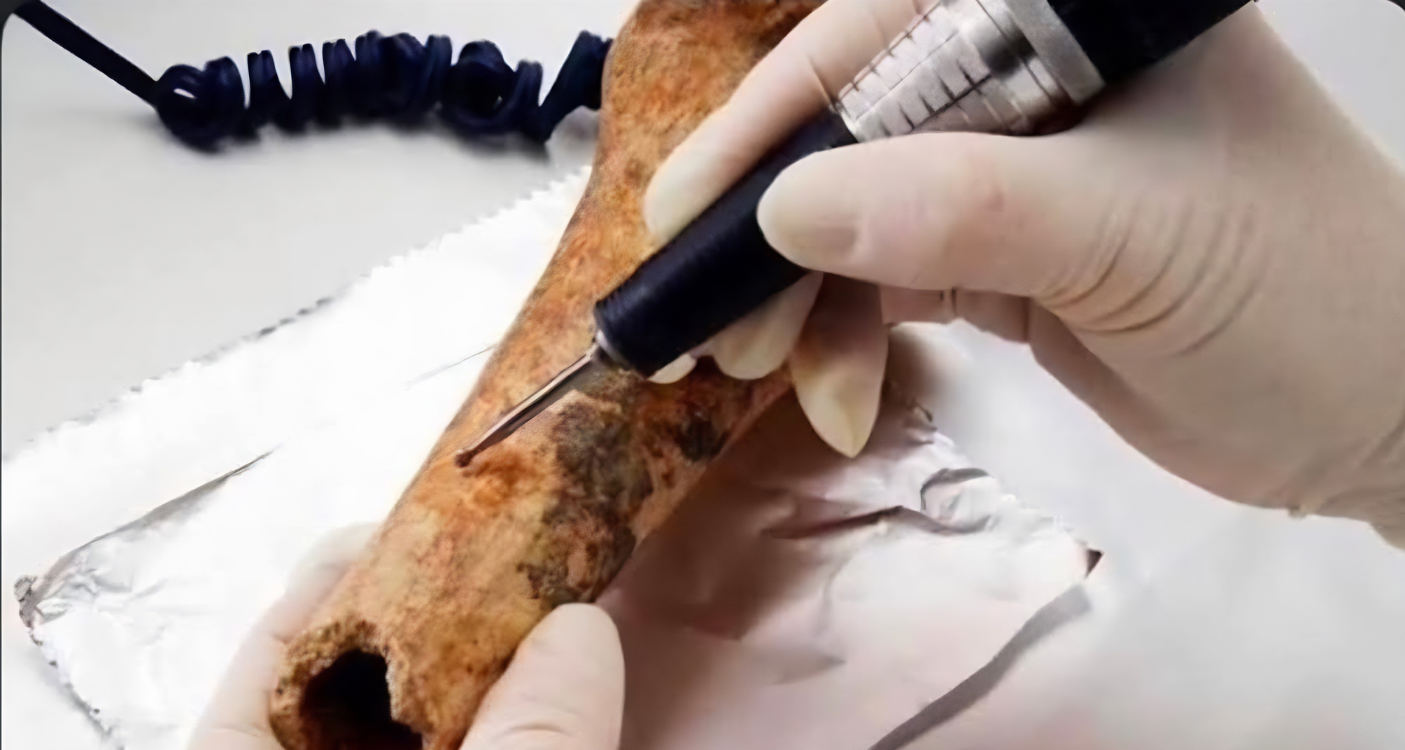 Carbon-14 decays quickly. It should not be found in materials claimed to be millions of years old.
Yet it is found in:
- dinosaur bones
- coal
- diamonds
If these were truly millions of years old, the carbon would be gone.
The dating methods rely on assumptions about the past, not direct observation.
8. ROCK LAYERS REPRESENT MILLIONS OF YEARS
 We’re told layers formed slowly over time.
But many layers stretch across entire continents with the same composition and fossils.
We also see ripple marks and flow patterns showing fast-moving water.
Where do we see that happening today?
Nowhere.
9. COAL TAKES MILLIONS OF YEARS
We’re told coal forms slowly from swamp vegetation.

But coal seams often contain:
- leaves
- bark
- twigs
- trees without roots
That’s not a slow swamp buildup.
That’s rapid burial.
Even more, coal can be produced in a lab in days under the right pressure and temperature.
The problem isn’t the evidence.
It’s the assumptions.
 10. CLAMS AND FOSSILS FORMED SLOWLY
Clams naturally open when they die.
But many fossilized clams are found closed.
That means they were buried alive.
We also see polystrate fossils, trees standing upright through multiple layers. That requires rapid deposition, not slow accumulation.
WHAT DOES THIS ALL POINT TO?
When you strip away the assumptions of “millions of years” and actually look at the evidence, something becomes clear:
The patterns match catastrophic processes.
Rapid burial. Rapid erosion. Rapid formation.
Exactly what you would expect from a global Flood.
THE REAL ISSUE
This isn’t just about rocks or fossils.
It’s about whether we trust the eyewitness account given in Scripture.
“Knowing this first, that there shall come in the last days scoffers… willingly ignorant…” (2 Peter 3:3–5)
The evidence is not hidden.
It’s everywhere.
And just like in Noah’s day, there was only one way of escape.
Jesus said,
“I am the way, the truth, and the life.” (John 14:6)
This isn’t just about the past.
It’s about truth.
And truth still matters.